Oasis Live ‘25 Toronto
Emily and I arrived at our hotel around 8 o’clock in the evening to the sound of planes and 97.7 FM, Toronto’s rock station. With the beautiful Niagara Falls in our rear view, the adventure had begun.
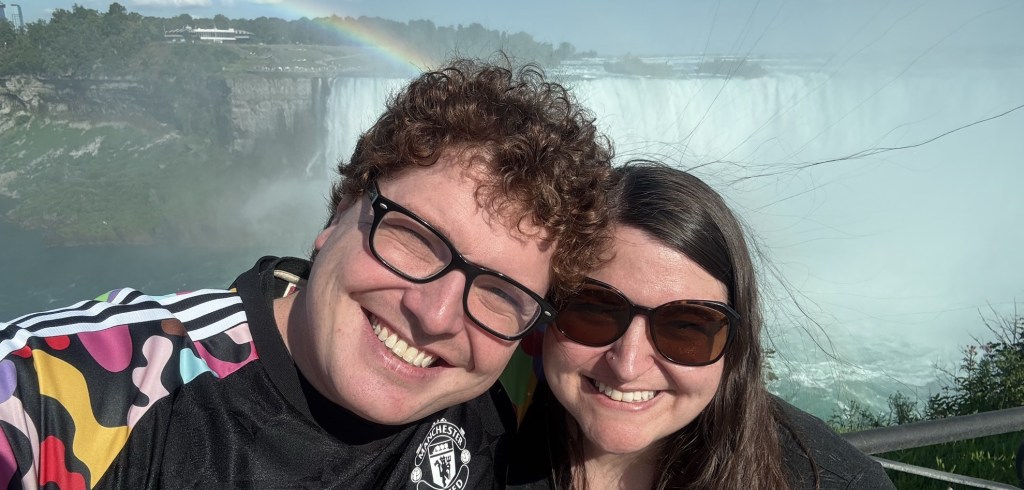

Downtown Toronto on a My Chemical Romance, Nine Inch Nails, Oasis weekend was a sight to see on its own. Not to mention their national exposition and some sort of cosplay event, there were characters everywhere. Emily navigated the city like she lived there, and if you can believe it, put up with me the whole time. We did the CN Tower and in the queue met a wonderful couple that was also there for the show. They asked if we had seen them before, I said I saw them with my dad when I was at the University of Toledo and jaws dropped. They live a mile from campus and his name was Justin, I’m not making this up. On the observation floor of CN Tower, Neil Young’s, “Rockin’ in the Free World” was playing.
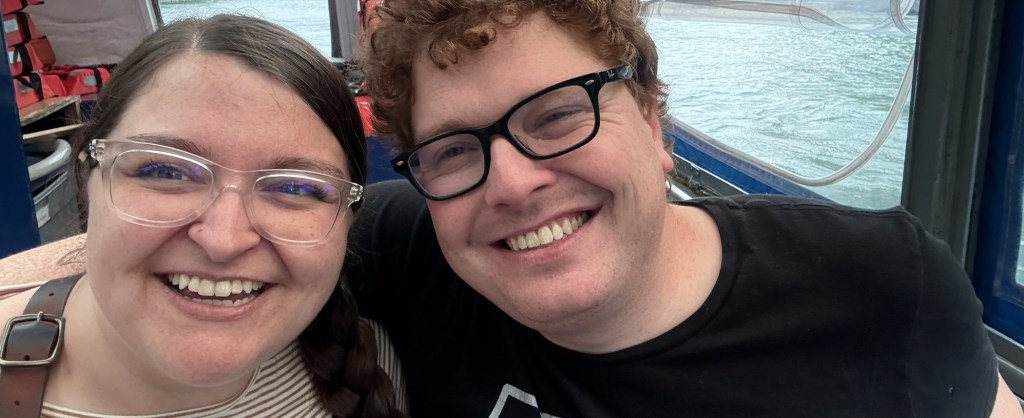
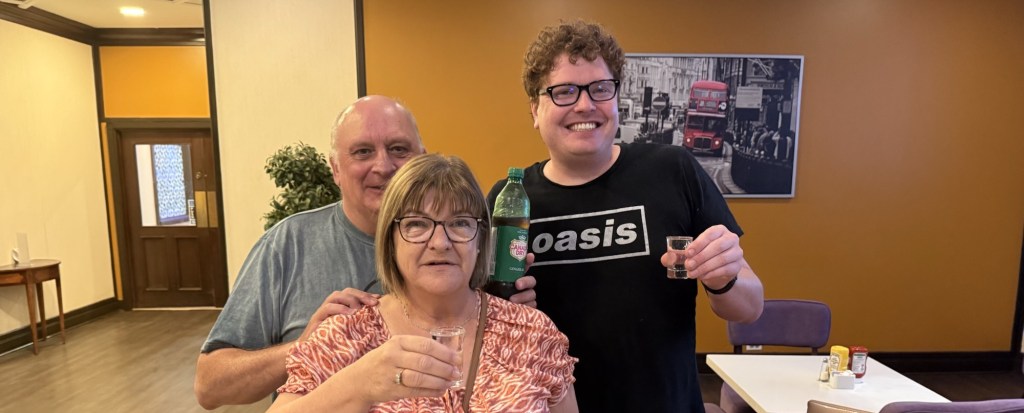
After the tower, we did a tour on Lake Ontario on a former Amsterdam canal boat. We chatted with the captain who was an actor, and during the only radio portion of the tour, “Wonderwall” came on the speakers. After that, I closed the hotel bar (it closed at 11) with an affable British couple that were my parents age, Leeds United fans, and had Monday tickets. The bartender poured an unknown number of free Molsons for the lads, Oasis was in the air everywhere, Facebook friends were made.
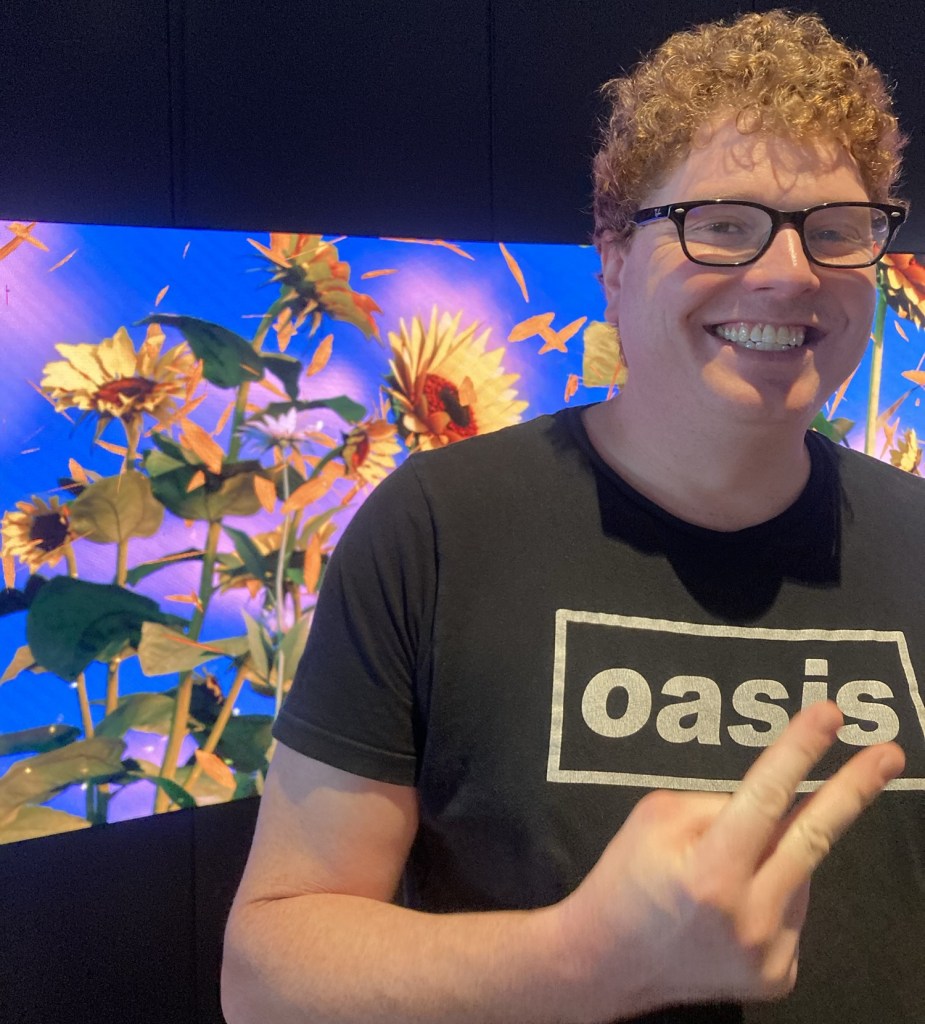
Day of show we went to the pop-up merch shop where we killed two and half hours with five other fans in line that couldn’t have been better. We swapped stories, jokes, favorite songs and pondered upon which live version of, “Slide Away” was the best. The youngest of us was in a Manchester United jersey that he was bravely wearing to the show, so we talked soccer too. I didn’t see a single thread of Toronto FC gear on the entire trip, but just as we were the next people in line, I get a tap on my left shoulder. It was a Columbus Crew fan. We shared a, “Glory to Columbus” back and forth and he was on his way, not looking back in anger.
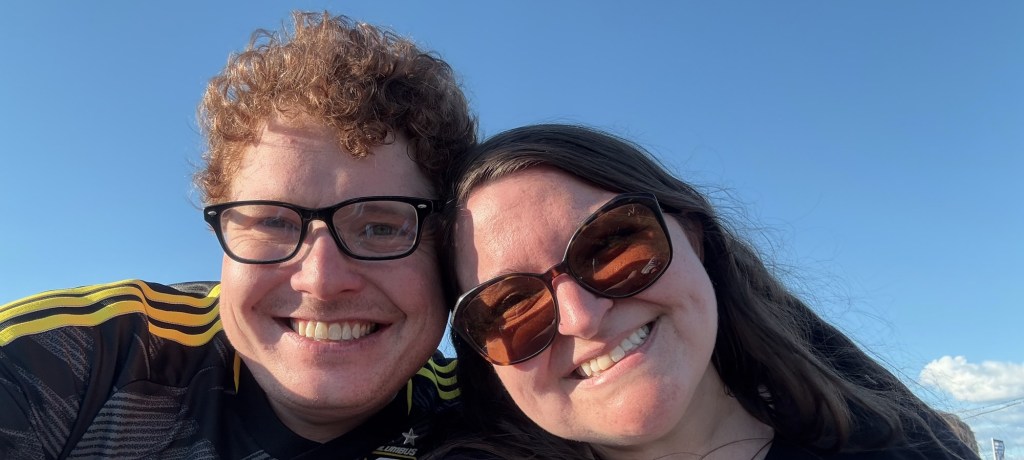
Then there was the main course, Oasis at the temporary stadium on an old airport runway. It was the best thing I’ve ever seen in my life. Better than, “Goodfellas” or “The Big Lebowski.” Better than Foo Fighters or Weezer or the last time I saw them in 2008. Better than Tiger Woods winning another Masters, or any of Columbus’ three MLS Cups. Cage the Elephant was a good opener who became a great opener when they started to play, “Sweet Home Alabama” then abruptly stopped and the lead singer laughed. The moment it stopped there was silence, Emily instinctively states, “Oh, thank god.” People turned around to smile at us.
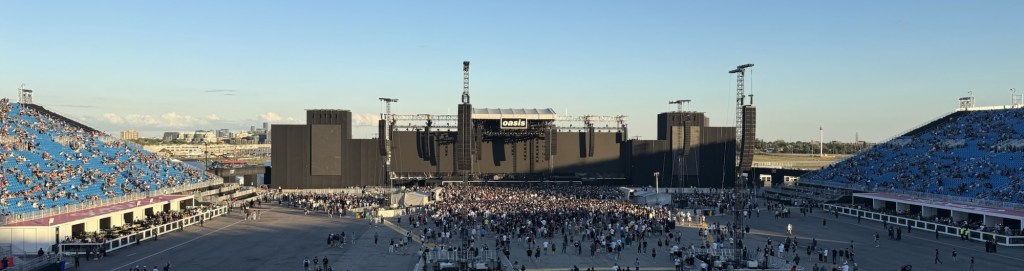
As 8:45 drew closer, Neil Young’s “Rockin’ in the Free World” played just before they came on stage. Thanks, Noel. All the swagger and joy washed over the 50,000 friends I just made. By the time they got through the second song, “Aquiesce” I felt the fees and surcharges were worth that alone, and it just kept going. “Cigarettes and Alcohol” was everything I thought it could be with a crowd that size, facing the wrong way, arms around shoulders singing the opening guitar riff and then jumping like Europeans.

Just when you thought it couldn’t get any more English, during, “Stand By Me” it started to rain, Liam noted that they have rain in Manchester too. Later, when Noel was prompted by some in the front, exclaimed, “Did you just boo Manchester?” He then proceeded to tell the French in the audience he would see them next Tuesday. The rain was steady but no lightning, and the only way I was leaving the stadium was on a stretcher. Standing there in the rain that soaks you to the bone with the love of your life to hear, “Live Forever” can’t be beat.
The encore of, “The Masterplan”, “Don’t Look Back in Anger”, “Wonderwall” and “Champagne Supernova” is to encores what Ohio State is to five star athletes. They may have the best damn band in the land, but Oasis is the best damn band in the world.

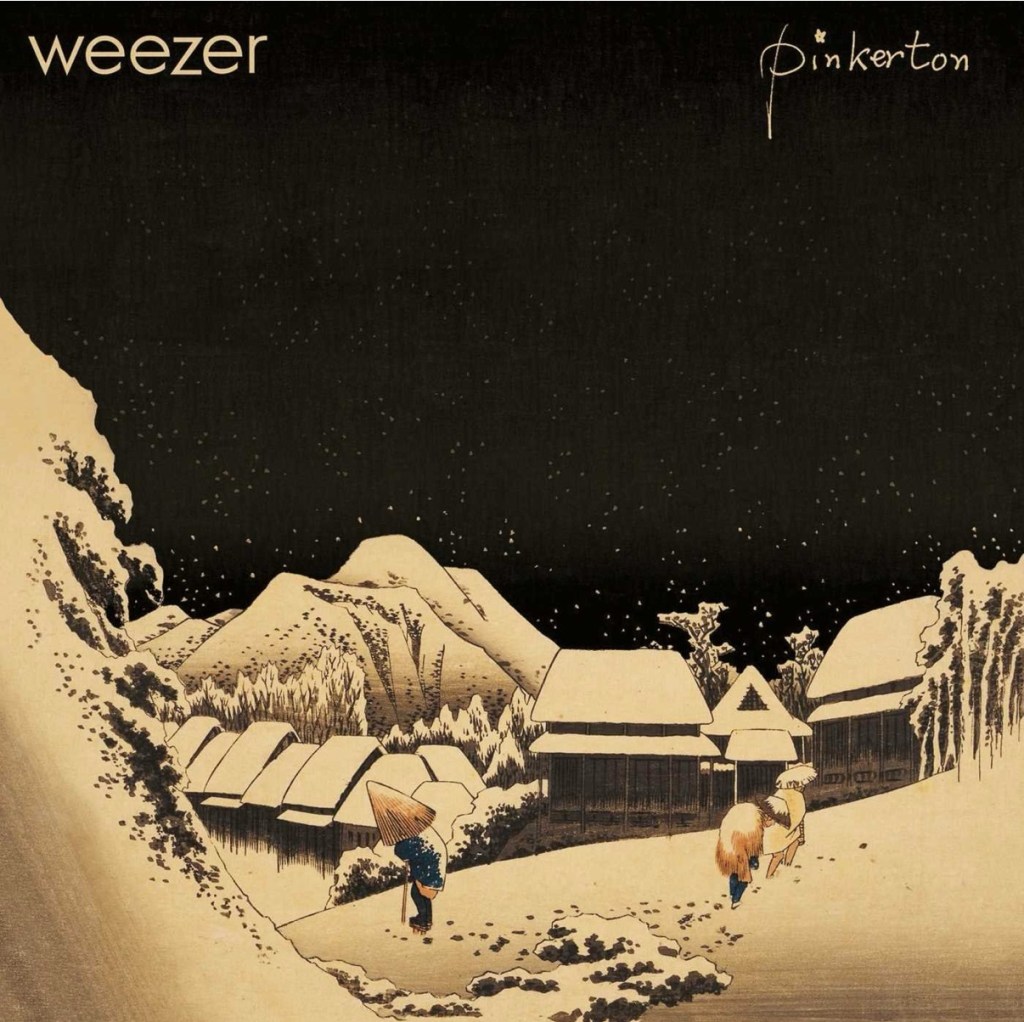
It’s a Wonderful Life of Albums: Pinkerton
Weezer frontman Rivers Coumo is not a rock star, despite making some of the best rock music of my lifetime. His existence and overwhelming success is antithetical to the rock and roll lead singer aesthetic of bravado and charisma, and we should all celebrate it. My first concert was Kaiser Chiefs, Weezer and Foo Fighters in 2005, and while they were considered co-headliners, Foo Fighters was the rock show. If you compared Rivers to Dave Grohl that night, it would boggle the mind that they are in the same business. It’s exactly that lack of stage presence that makes Rivers honest, relatable, and authentic because he just couldn’t be bothered to fake it. The beautiful vulnerability expressed on 1996’s Pinkerton is a window into his world, and provides the clever comfort of knowing someone else is out there striking out with girls and feeling disillusioned.
Early reception to Pinkerton was not warm, although it would eventually go on to sell over a million copies in the decades that followed. As the follow up to the wildly successful debut of Weezer (The Blue Album), expectations of another fun pop friendly record were dashed. There wasn’t a, “Buddy Holly” on this album, but that’s not to say it didn’t have some stellar tracks. Artists sing about lost or unrequited love all the time, as they have through millennia, but few get as personal as Rivers gets for 34 minutes on Pinkerton.
The first single, “El Scorcho” finds Rivers pleading through the chorus about how similar he is to the love interest in question, and how they would be great together. Where it really turns up the emo to eleven with the bridge, “How stupid is it? For all I know you want me too, and maybe you just don’t know what to do, and maybe you’re scared to say: ‘I’m falling for you.’” It’s the conversation he’s had in his head for a week making its way into the song without a hint of editing to shield himself from the hurt. As a teenager I was thinking damn, that paralyzing fear that a beautiful woman will put you in exists for him too.
As he mentions at the beginning of, “El Scorcho” Rivers is into half Japanese girls. So how could he not have a song with lyrics that could span the Pacific, “Why are you so far away from me? I need help, and you’re way across the sea, I could never touch you, I think it would be wrong, I’ve got your letter, you’ve got my song.” “Across the Sea” is truly an intercontinental ballistic serenade, however it wasn’t just oceans but orientation that robbed Rivers of love as well. “Pink Triangle” describes him barking up the wrong tree with a lyrical treasure, “When I think I’ve found a good old fashioned girl, then she put me in my place, everyone’s a little queer, can’t she be a little straight?”
The Blue Album this is not. You won’t find pop hits similar to “Island in the Sun” or “Beverly Hills” on this album, but they played five songs from Pinkerton on their blue album 30th anniversary tour and all were highlights with that crowd. It’s also worth noting that this record is like the King James Bible to the emo genre, and while that’s not my cup of tea, you can see the origin story here. It makes you think, it makes you feel. I’m sure people who label themselves ‘alpha male’ everywhere belittle it, which these days is like a cattle prod for a listen.
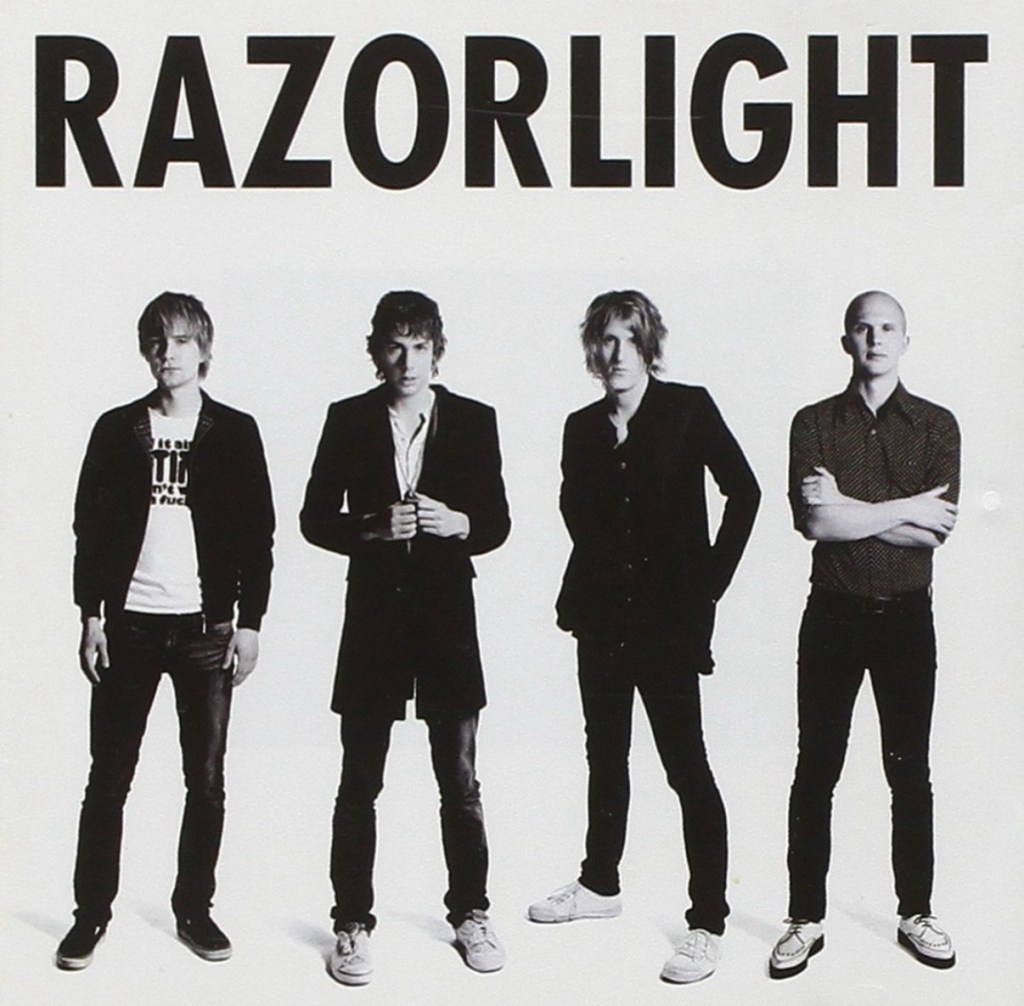
It’s a Wonderful Life of Albums: Razorlight
When I started writing about some of the best albums I’ve heard from my lifetime, I wanted people to remember them again and listen or want to hear them for the first time. Since this one will be of the last from this era of the series, I was admittedly a little more self indulgent with this choice. That’s not to say it isn’t a great album, however Razorlight were more of a UK phenomenon. One college evening I was watching a show called London Live on YouTube when their self-titled second studio album from 2006 found me.
The album produced five singles in the UK, and never got much traction here in the states. UK number one, “America” struck me distinctly as I was deep in development as an Anglophile, for several reasons. It begins with a gentle clean guitar intro as Johnny Borrell begins to lament on the constant zeitgeist of the United States in his European consciousness, “There’s nothing on the TV, nothing on the radio that means that much to me. There’s nothing on the TV, nothing on the radio that I can believe in. All my life. Watching America.”
I could join Johnny and do another paragraph lamenting along with him about the America of the 2000s, but it’s the song that comes right after it that made me buy the album. “Before I Fall to Pieces” is a nearly perfect pop rock song from the era featuring an infectious guitar rhythm, and one of my favorite opening verses in song, “Oh, one more drink and then I’ll go, but there’s one more thing I’ve got to know. Does he take you places that I don’t? And what happened to the story that we wrote?” I know this is a song about a guy losing a girl and being pretty broken up about it, but the happy sounding major chords that form the song will only let you smile. It was love for a while.
I guess I was lucky that there were all these great guitar focused indie rock records around exactly when that’s what I was looking for. As I was learning guitar, there was a flurry of great stuff to play. Album opener, “In the Morning” is a flashbulb back in time for me to that point of college explorations, inspirations and possibilities. I spent a lot of nights going around the world musically without ever leaving my room. “Remember when you were young, you’d lose yourself? In the morning you know we won’t remember a thing. In the morning you know it’s gonna be alright.”
Razorlight received mixed reviews upon release, and it isn’t a best seller, but an honest feeling set to guitar. It suggests, “Who Needs Love” before four tracks later admitting, “I Can’t Stop This Feeling I’ve Got.” There is a transparency level that makes it feel real, a raw feeling from the songs that delve into of love and loss, and jangly guitars to join the party. Give these ten songs a chance, it clocks in at little more than a half hour and when, “Before I Fall to Pieces” comes on, it will hit you right in the feels.
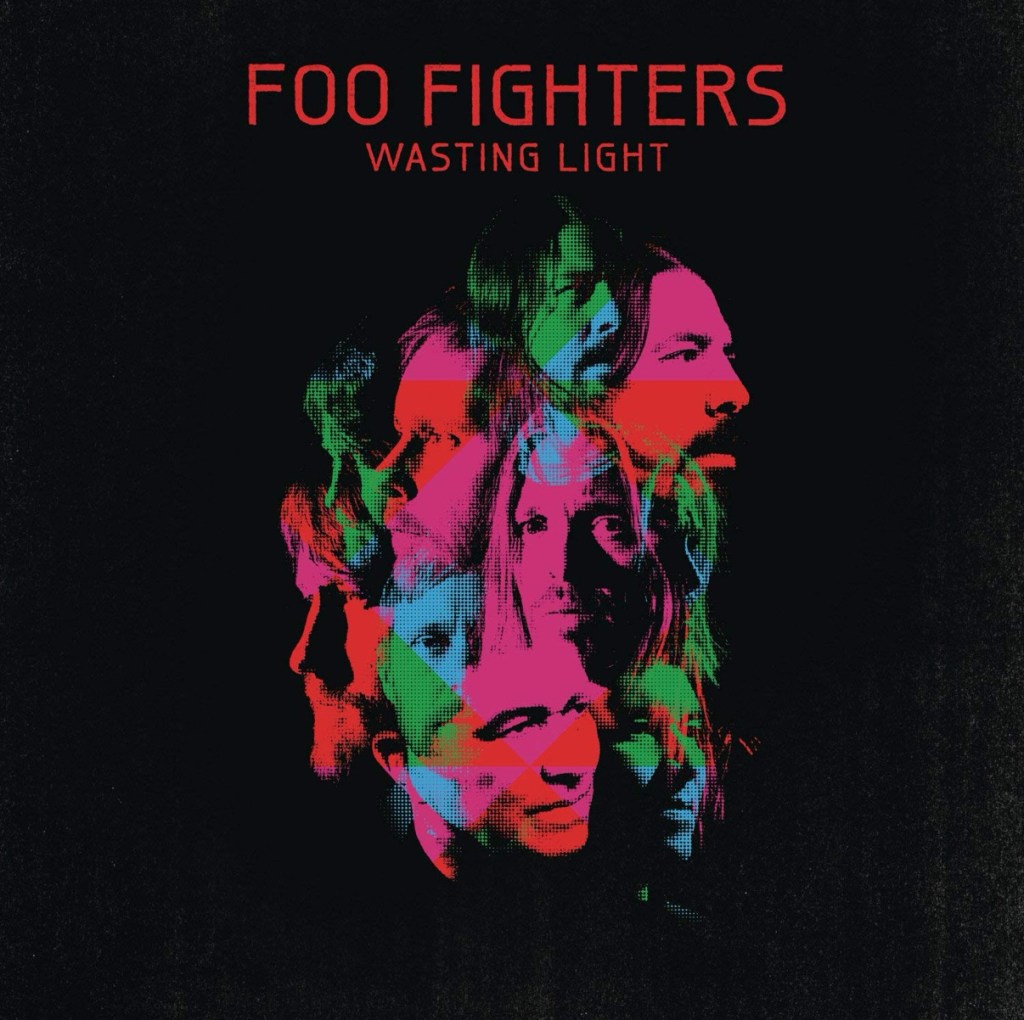
It’s a Wonderful Life of Albums: Wasting Light
The Foo Fighters career of Dave Grohl has reach: across time, across mediums, across borders. When an artist reaches the zenith of their profession, some lose the drive that got them there and stagnate, others get lost in fame, Dave decided to tweak the bands’ sound and record an analog album in his garage. 2011’s Wasting Light was recorded entirely on tape, allowing for no digital editing or correction of the takes. The band also leans into a more raw sound, without neglecting to include a few melodic rock and roll gems along the way.
Lead single, “Rope” demonstrates what you can do in a band with three great guitarists. There is no shortage of six string on this banger. The chorus is classic Foo Fighters, distortion, big drums and Dave Grohl bellowing “Give me some rope I’m coming loose, I’m pulling for you now. Give me some hope I’m coming out my head, into the clear, when you go, I come loose.” Come for the riffs, stay for the lyrics, the second track puts this album into another gear to hit its apex and we’re along for the ride.
There are songs on later Foo Fighters albums that remind me of what they sounded like earlier in the discography and, “These Days” is one. “One of these days you will forget to hope and learn to fear” is uttered so prophetically, like many of the other lyrics in the song structure. There is a maturity to the song, and a weight of experience, almost like if 2002’s “Times Like These” grew up and got some seasoning. This evolution has happened several times for a band that has spanned four different decades, and if we’re lucky Dave will keep making music like this.
Determined not to let the record die with a whimper, Dave saves the best for last. As far as album enders go, “Walk” checks all the boxes. It’s a reflective glimpse at a life that has gone on long enough to have trials, tribulations, and something to say, “I think I lost my way, getting good at starting over, every time that I return.” Despite going through these challenges and heartbreaks, the bridge of, “Forever, whenever, I never wanna die” repeats to signal a future and to cue a fireworks display that is the end of the song.
With six singles and four Grammys to show, let’s just say Dave is doing more with his garage space than any of us. It was also a cool gimmick that the cd came with a small piece of recording tape that contained usually a single snare or guitar note, people enjoyed figuring out which song it came from. It will also forever be one of the Foo Fighters albums that features the late Taylor Hawkins manning Dave’s throne on the drum kit. Add to that, the band did a tour of several fans’ garages to promote the spirit of the album. More people that reach the summit should take a cue from Dave Grohl on what to do once there.
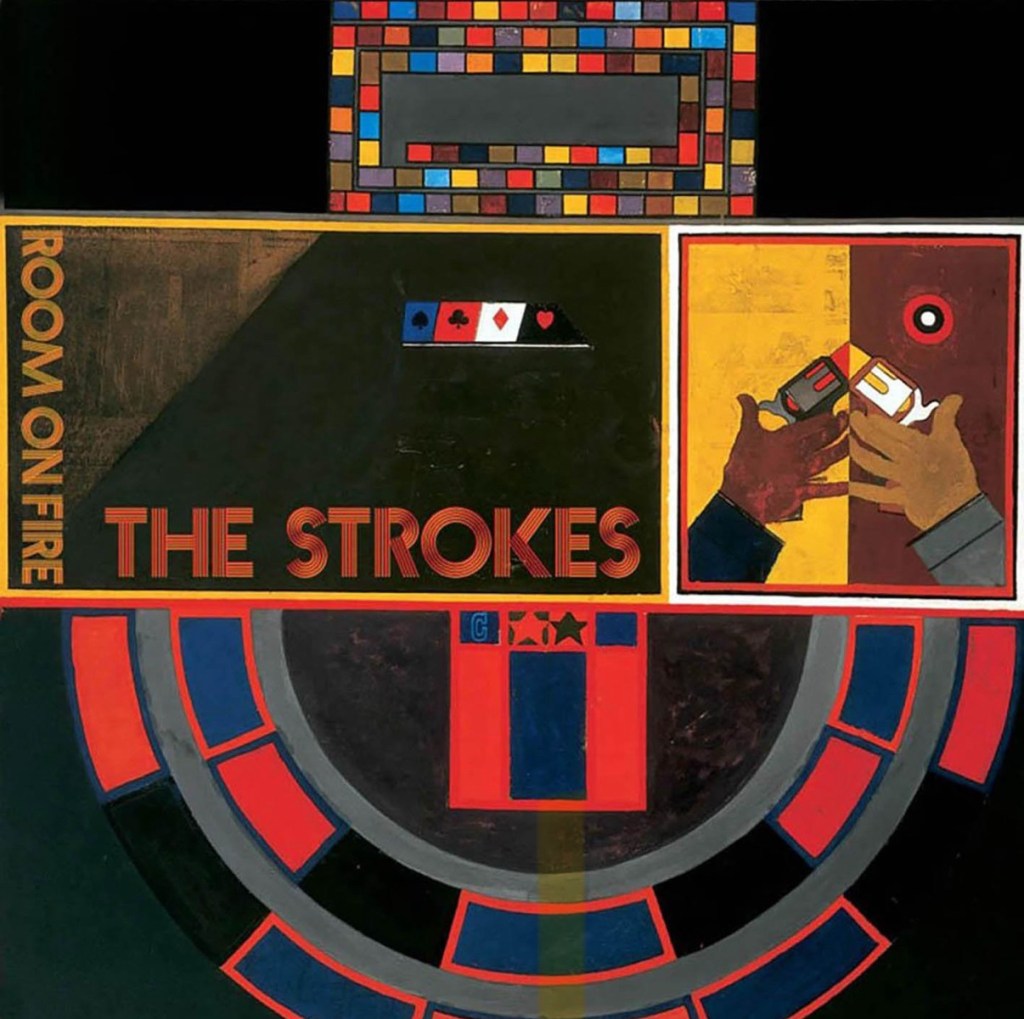
It’s a Wonderful Life of Albums: Room on Fire
Most sports fans are familiar with the term, “sophomore slump” to describe a player who excelled in their rookie season only to have numbers dip in the second. The Strokes were one of the most hyped bands of my lifetime after their iconic debut album Is This It? The electric guitar was back, rock music wasn’t dead, New York City is alive again amongst other hyperbole. The 2003 follow up Room on Fire keeps the formula of guitar utopia combined with Julian Casablanca’s reverse reverb vocals and just enough sleaze to make you feel alive.
It is difficult to describe, “Reptilia” without using the word guitargasm, because that’s what it is. Axe men Nick Valensi and Albert Hammond Jr provide perhaps the quintessential example of band’s sound, and the song was featured on both the Rock Band and Guitar Hero video game franchises. With over 600 million streams on Spotify, it is among their most popular and the pace of it is that of blissful loss of control, “I said, ‘Please don’t slow me down, if I’m going too fast. You’re in a strange part of our town.’”
The first single for the album, “12:51” will enter your ears and render your mind awash with youthful balm. The guitar hook is a lovably catchy bit of joy that mimics the vocals about the prospects of going out on Friday night after a lonely streak. The song is two and a half minutes of bliss, “We’d go and get forties, then we’ll go to some party, oh really, your folks are away now? Alright, I’m coming, I’ll be right there.” The song belongs on a playlist for a bad day, as it is sure to cheer up even the most jaded among us.
A documentary was made about the 2000s New York City music scene led by The Strokes, borrowing the title from one of this albums’ best tracks, “Meet Me in the Bathroom.” When you were a rock band with the edge The Strokes had, you almost needed a song about a bathroom hookup with a line this good, “We were just two friends in lust, and baby, that just don’t mean much. You trained me not to love, after you showed me what it was.” The lucid reflectiveness of that lyric will ring out for decades, long after the amplifiers are still.
If this album represents a sophomore slump, then my ears must be broken. Other highlights on the record include the opener, “What Ever Happened?” as well as single, “The End Has No End” but you can’t really can’t go wrong with any of them. If you loved the first effort from the band you are almost certain to enjoy this one. While it may not have the clout of the debut album, I come back to this one whenever I’m in a mood for upbeat guitar music by a great band. Sometimes there is no substitute for the youthful exuberance of the early albums of The Strokes, no matter your age.
It’s a Wonderful Life of Albums: Appetite for Destruction
Just sneaking into the qualification criteria, Guns’n’Roses’ 1987 debut Appetite for Destruction is for me, a celebration of Slash. Unleashed upon the world on July 21, 1987, less than two months after I was, there are some songs here that will live out eternity in classic rock lore. It topped the Billboard charts and sold over 30 million copies, this was not a flash in the pan, but an onslaught of guitar riffs that were among the best of the decade. This was in a time when rock and roll was still on the tip of everyone’s tongue, as evidenced by no less than three singles cracking the top ten of the Billboard Hot 100.
When you talk about all time rock intros, or about masterful use of guitar effects, it would be a sin not to mention album opener, “Welcome to the Jungle.” Slash employs the delay pedal to perfection on the opening salvo of this classic rock mainstay. It puts you into a swarm of notes before kicking into the main riff, and then takes you on a ride. You also have to love the lyric inspired by a homeless man when the band first traveled to New York City, “You know where you are? You’re in the jungle baby, you gonna die!” Really the only knock on the song is its use by the Cincinnati Bengals as a stadium anthem. Despite being to the big game twice they have just as many Super Bowl rings as Cleveland.
Working through the first half of the album there are memorable tracks like, “Nightrain” and, “Mr. Brownstone” that keep it flowing. I generally consider Guns’n’Roses to be above the hair band era in terms of quality, but you can hear the sounds of the time ever present. It changes however, when you hear that heavenly chorus pedal opening from Izzy Stradlin give way to Slash’s relentless riffs on, “Paradise City.” As far as an ethos, you can do a whole lot worse than, “Take me down to the paradise city where the grass is green and the girls are pretty. Oh won’t you please take me home?”
I have been involved in many, many, late night, can’t-see-straight classic rock music discussions with both those whose musical acumen I respect, and those I quickly dismiss. There is a candidate for best classic rock song of all time on this album and it’s called, “Sweet Child O’ Mine.” Let me just go through some classic rock attributes it has in spades: great and uplifting lyrics, piercingly iconic intro, and a great rhythm section. All of that allows for the quintessential classic rock staple, the guitar solo, of which this song has two great ones. The first one acts as a great interlude and preface for Slash’s out of his mind main solo. I can’t overstate how stop-you-in-your-tracks great this guitar solo is, and that is why it is in the pantheon of classic rock. I mention this because if I think of glass tank distilled, 200 proof classic rock, it’s this, “More Than a Feeling” by Boston, “Stairway to Heaven” by Led Zeppelin, and “(I Can’t Get No) Satisfaction” by The Rolling Stones. That would be my current Mt. Rushmore, subject to change via beer or hearing Toto’s, “Africa” late enough into the night.
I didn’t want to focus on the debauchery or disfunction of Guns’n’Roses, that would only serve as distraction from this great collection of songs and I get enough lead singer drama with Oasis. Slash’s guitar playing on this album is nothing short of extraordinary, and that is reason enough to give it another spin.

It’s a Wonderful Life of Albums: Futures
The opening narration of the movie The Big Lebowski ends with noting that The Dude was “The man for his time and place.” In a similar vein, Jimmy Eat World’s 2004 album Futures was the album for my time and place back then, and I was comfortably not alone. It was a more mature sounding album for the band following the popular success of Bleed American, and a coming of age record playing in the background of first cars, first dates, and youthful mistakes. We came up with the pop success of the, “The Middle”, and “Sweetness”, we grew up with “Work” and “23.”
Before smart phones and the prevalence of social media, we would communicate through various instant messaging programs such as ICQ, MSN, or AIM on home computers at night. I don’t remember an album used more for morose, cryptic and overly emotional teenage away messages than the lyrics of this one. It wouldn’t be out of the ordinary to see a lyric status one week about the love of the person’s life, only to have a break up lyric from the same album the following week. Such is the fickle and formative life of the high school teenage wasteland, a misery best described on, “The World You Love”, “We’re only just as happy, as everyone else seems to think we are.”
Jimmy Eat World is far from averse to writing love songs, they’ve been doing that since they formed in 1993. As far as what was in the mainstream at the time, you could do a lot worse than “Work.” It really could be love at any age, but it hits you right in the youth, “All the best DJs are saving, their slowest song for last, when the dance is through it’s me and you, c’mon would it really be so bad?” The band have distanced themselves from the ‘emo’ label for their entire career, but that doesn’t mean they can’t kidnap your emotions and put them on a rollercoaster. “Can we take a ride? Get out of this place while we still have time.”
I saw Jimmy Eat World on an anniversary tour for this album back in 2014 with great company and the highlight was album capstone, “23.” It is arguable, but for me, “23” is the best song the band have ever made. It brings out all the best characteristics of the band to their fullest extent, the emphasis on guitar, relatable and passionate lyrics, and Jim Adkins’ affable voice. “You’ll sit alone forever, if you wait for the right time, what are you hoping for? I’m here, I’m now, I’m ready, holding on tight, don’t give away the end, one thing that stays mine.”
Futures is a journey for me because it was the album of a time and place back then, but it could be a great listen for anyone at any time. If, “Kill” is tied to a lost ancient love, I apologize for bringing the album up. If, “Night Drive” makes you remember fogging up the windows of your first back seat, I know you remember her name. If you went on to see the band seven times, you’d be me, and this album had a lot to do with it. Jimmy Eat World’s music activates flashbulb memories and emotions like nobody else in my record collection, and I know I’m not alone.

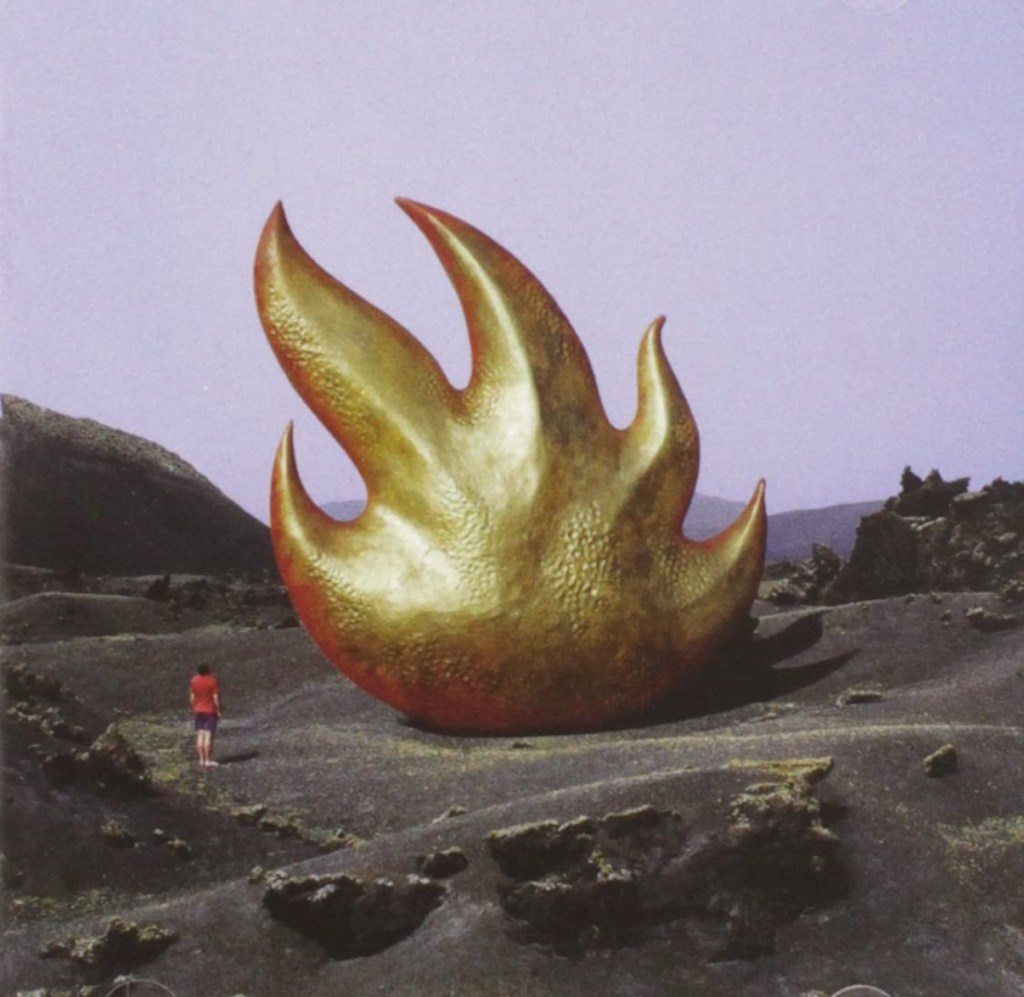
It’s a Wonderful Life of Albums: Audioslave
The supergroup is not a new concept, going back to the days of The Traveling Wilburys, Cream, or Crosby, Stills, Nash and Young. Arguably the best supergroup of my lifetime, after a nod to Them Crooked Vultures, would be Audioslave. Formed in 2001 with Chris Cornell of Soundgarden and Rage Against the Machine members Tom Morello, Tim Commerford and Brad Wilk, this was a band that could blow the roof off of a venue. Their self-titled first album is fantastic rock music made by some of the most talented and innovative musicians of the nineties.
The record begins with Tom Morello lighting a match on one of the best riffs of the decade. Named for an Apache leader who resisted western expansion, “Cochise” just rocks. Naming the song after the resistance is very on brand for the Rage Against the Machine members, but the album doesn’t tread in the same territory as one of those efforts. This is a fairly apolitical music driven project, but I’m glad they snuck the title in there. The band could not have picked a better track to open with, and Cornell’s distinctive voice breathes life into the chorus of the track, “Go on and save yourself, and take it out on me.”
Anyone familiar with Audioslave will be able to point to, “Like a Stone” the second single, as the one that took the album to another level. Topping the billboard rock charts and even breaking into the mainstream airplay of the time. The climax of this perfectly constructed hit comes with the Morello wah pedal solo. Slow and deliberate, it takes us on a sonic journey before giving way to the more subdued and thoughtful bridge, “For all that I’ve blessed, and all that I’ve wronged, in dreams until my death, I will wander on.” This is the sound you get when you put together a super group with this kind of clout, and it’s glorious.
With the opener still ringing in your ears, another riff heavy delight comes at you with, “Show Me How to Live.” This was also a single that broke into the mainstream for the band, they were really on a roll. The lyrics pull from some Christian iconography, turning the title into a demand, “Nail in my hand, from my creator, you gave me a life now show me how to live.” If you’re worried that it’s too heavy, there’s another dive into the Morello guitar effects library for the solo to re-center yourself.
I cannot allow this article about 2002’s Audioslave to finish without mentioning, “I Am the Highway.” “I am not your rolling wheels, I am the highway. I am not your carpet ride, I am the sky.” There is a lot to love on this album, especially if you love talent. Cornell’s voice has long been some people’s favorite instrument, and it sounds as good as ever here. When you combine it with Morello’s pedal board and creativity, the deft brush strokes come in waves to cover the canvas from corner to corner.
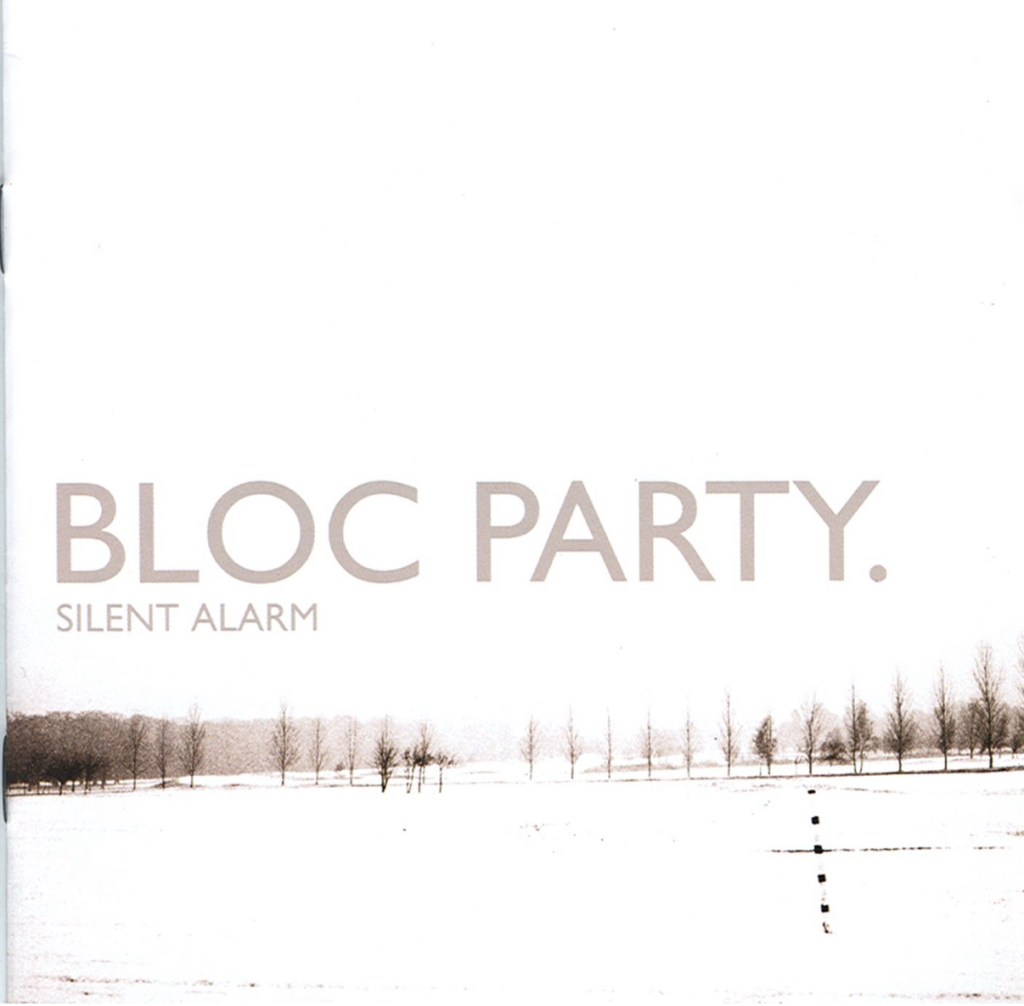
It’s a Wonderful Life of Albums: Silent Alarm
I took a chance on Bloc Party after hearing only, “Helicopter” on the soundtrack to one of the FIFA soccer games, the song was strong. I read a couple of positive reviews of the album and on to the music club website I was part of. I may seem like a mark for having that much faith, buying an album from a song that was clearly marketed to me through my favorite sport. Maybe I’m a mark because the Anglophile in me couldn’t resist the delightful accent of lead singer Kele Okereke’s voice. Sometimes albums fall out of the sky and you just happen to be there to catch the vibrations. Mark my words, in 2005 and now, this is a great album.
I fell in love with this album my last year of high school, and the singles from it dotted just about every playlist I made as a college freshman. I didn’t know how formational it was to me until I started falling asleep to it, all that guitar. The aforementioned single “Helicopter” would also go on to appear on one of the Guitar Hero games, it was truly a time to be alive. Its frantic, high energy guitar focused greatness could not be contained, “Stop being, so American, there’s a time and there’s a place.” Clocking in at over 170 beats per minute, it’s like these guitars are racing to a finish line.
“Turning away from the light, becoming adult, turning into myself, I wanted to bite not to destroy, to feel her underneath, turning into the light.” “Banquet” hooks me right away every time with the mix starting out with one guitar in each ear, playing back and forth at each other. A little bit about growing up, a little bit too much guitar, and it always feels a little short, leaving you waiting for the next time it comes on your playlist. They struck a nerve with the way this one feels, and then accentuated it with an angry guitar outro to bring the chaos to a natural conclusion.
There’s an angelic quality to the guitar arpeggio and atmosphere created on the album track, “So Here We Are.” While it is light on lyrics, it creates this space where you can just lay back and enjoy it until it crescendos with the repeated, “I can see again.” As if to pull a 180 on that thought, on, “The Pioneers” we get a nervous and tense lyrical onslaught followed by a despondent chorus, “We promised the world we’d tame it, what were we hoping for?”
If you’ve been keeping up with this weekly series, you know the bias toward guitar focused albums is not something I’ve hidden. This is one that may have slipped through the cracks despite nearly universal critical acclaim and selling over a million copies. The record takes you on a six string journey for nearly an hour, and it’s a ride you will want to take again. I hope you continue turning into the light, whatever that means for you.
It’s a Wonderful Life of Albums: Nevermind
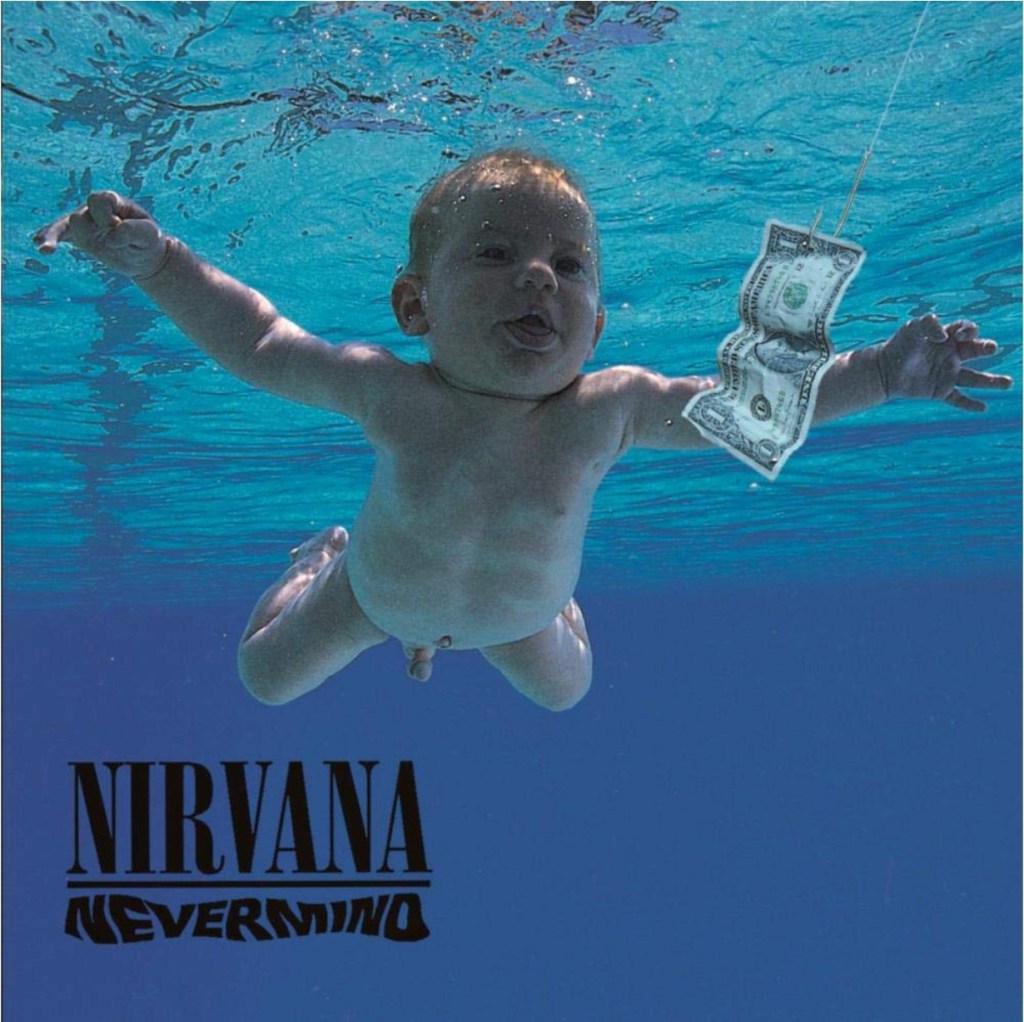
I would be remiss to love rock music as much as I do, and neglect to include 1991’s Nevermind in this series. The album comes up on every nineties list of best albums of the decade. Nevermind is the grunge genre’s magnum opus. There were a host of good grunge bands in the early nineties but there was only one Nirvana. Lead singer and guitarist Kurt Cobain was a Beatles fanatic, and his band travel in the same circle of rock lore as the Beatles in that they weren’t around long enough to put out any bad albums. Around long enough to establish greatness and then gone in an instant, like too many in the business, a suicide way before their time.
“Smells Like Teen Spirit” is simply an all time great song, and it kicks off this record with overwhelming force. If I’m honest it’s between this and, “Wonderwall” for song of the decade, a yin-yang argument I would gladly have any time. I love playing this song, everybody with a distortion pedal loves playing this song on guitar, but it’s the drums that are the glue. It is worth watching any live version of this song where Dave Grohl is absolutely abusing the drum kit to perfection. Say whatever you want about Foo Fighters, Dave is at home on the drums for this album and it’s where he feasts with godlike ability.
I was one of those people with Nirvana who, “Knows not what it means” to skip any of the songs on this album, but particularly the first three. Teen spirit comes to its conclusion and then you are immediately greeted with some more massive power chords with, “In Bloom.” The dynamic of quiet verse with a loud distorted chorus was perfected by Nirvana early in the decade, and imitated by many. There isn’t a lot there lyrically, but it works and the trio sound great here.
Following those two tracks would be a nightmare unless you are Kurt Cobain, who had, “Come as You Are” up his sleeve. The great guitar line repeats throughout, and includes the immaculate alt-rock apathy line, “Take your time, hurry up, choice is yours don’t be late.” It can be debated whether the song is about heroin, but it doesn’t matter, it’s just a great song. So much so that it was added to the welcome sign in Kurt’s hometown, it reads, “Aberdeen, Washington Come As You Are.” It’s so sad to think about the music we didn’t get from him, but this is what I call a proper memorial.
Before he retired, my father was a guidance counselor, and thinking about Nirvana and Kurt Cobain always reminds me of how he first came to know their impact. The day after news circulated that Cobain had passed, a student came into his office beside themselves in grief. He was busy raising my brother and I, so forgive him for not being up on grunge back then, but their musical impact on people was clear. The reach of their music was far and wide, harnessing the melodic and the chaotic with equal brilliance.
 liveforthepage
Recent Comments