John Mayer was a polarizing figure before he broke Taylor Swift’s heart, frankly for a period of time he was a ladykiller who also played guitar. Thankfully for me, the guitar part was doing all the heavy lifting. His first two albums Room for Squares and Heavier Things were wildly successful albums in their own right, but it was clear John wanted to step out of the shadow of being the guy who wrote, “Your Body is a Wonderland.”
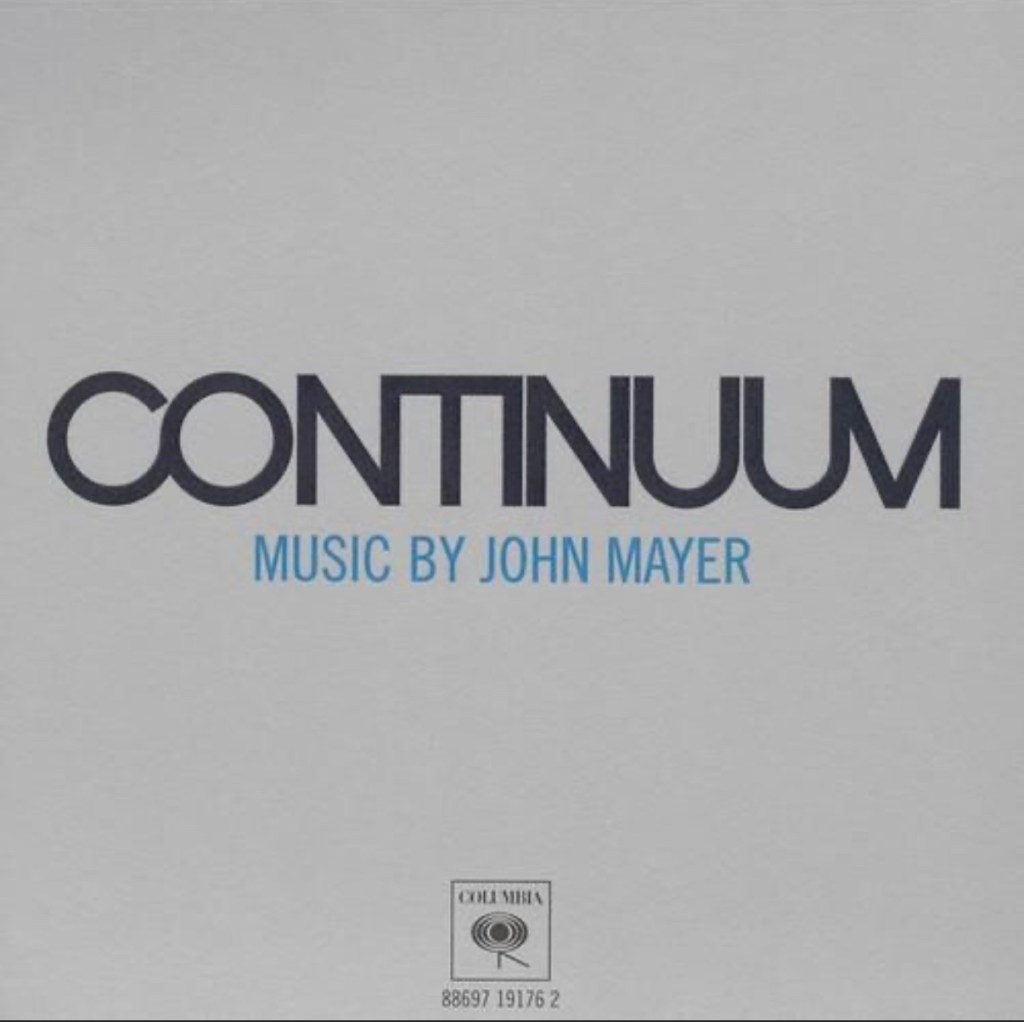
Continuum was golden era John Mayer, coming off the heels of his John Mayer Trio project with legends Pino Palladino and Steve Jordan, he was in peak form. This is 2006, three years after Bush declared, “Mission Accomplished” and well after the honeymoon period of the Afghanistan and Iraq wars. “Waiting On the World to Change” is about as close to a protest song as a pop artist will get, and it’s fantastic, “Now if we had the power, to bring our neighbors home from war, they would have never missed a Christmas, no more ribbons on the door.”
Elaborating upon this disgruntled feeling, “Belief” echos a similar sentiment, and who could forget the Islamophobia that ran through the country like vodka through an Alpha Kappa bro: “We’re never gonna win the world, we’re never gonna stop the war, we’re never gonna beat this if belief is what we’re fighting for.” It’s not all gloom from the oughts, there is also blues, “Gravity” and “Vultures” are fantastic songs written during his time with the Trio. In addition, there is a completely respectable cover of Jimi Hendrix’, “Bold as Love.”
The song that hit the hardest on this album with its’ weeping lead guitar is, “Slow Dancing in a Burning Room.” John really gets after the solo on this slowly ending tragedy of a relationship: “I’ll make the most of all the sadness, you’ll be a bitch because you can, you try to hit me just to hurt me, so you leave me feeling dirty, ‘cause you can’t understand.” This is John Mayer’s best work, on his best album. It shows how much he can squeeze out of a Fender Stratocaster, and really makes you forget the bubblegum pop stuff, as good as it is.
If you wrote off John Mayer twenty years ago as fluff for the tabloids, you would be wrong, but it was easy to get that impression. I could tell you it sold five million copies in a post Napster world, but that’s just a number. I could tell you there’s another side of John, and he explores it here, but that’s subjective. What I will tell you is that this album is his best work in the studio, and stop this train, I wanna get off and listen to this album again.


 liveforthepage